13/01/2020
Notting Hill film locations remain some of the most recognisable and heavily visited movie sites in London, more than 25 years after Hugh Grant and Julia Roberts first appeared on screen together.
Visitors still arrive in West London searching for the famous blue door, Portobello Road and the Travel Bookshop. The colourful streets helped turn Notting Hill into one of London’s most recognisable areas.
Yet the real Notting Hill offers far more than one romantic comedy.
Beyond the pastel-coloured houses and busy market stalls, Notting Hill is known for its music history and famous filming locations. Visitors also come to see celebrity homes, hidden gardens and colourful mews streets.
If you are planning to explore the real Notting Hill filming locations in London, here is your complete guide.
The majority of Notting Hill was filmed on location around the real Notting Hill neighbourhood in West London, particularly around:
Unlike many Hollywood productions, the filmmakers used genuine streets, homes and local businesses throughout the neighbourhood. This helped give the film its authentic London atmosphere.
Writer Richard Curtis lived in Notting Hill himself and wanted the area to feel like a believable part of London rather than a polished Hollywood version of the city.
Some interior scenes were later recreated at Shepperton Studios.
However, many of the film’s most recognisable locations can still be visited today.
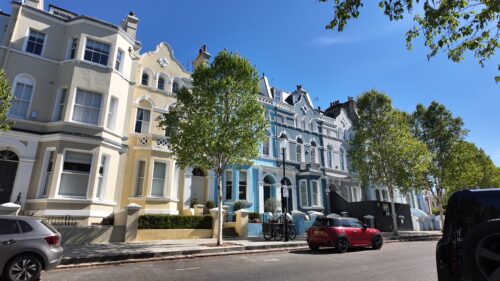
Part of the reason Notting Hill still resonates today is because the locations never felt fictional.
Unlike many romantic comedies filmed largely on studio sets, Notting Hill used real London streets, cafés and neighbourhoods throughout the production. More than two decades later, many parts of the area still look remarkably similar to how they appeared in the film.
For visitors, exploring Notting Hill feels less like walking around a movie set and more like stepping into a version of London that genuinely still exists.
Today, the neighbourhood is known for:
Even visitors who have never seen the film are drawn to the area for its atmosphere, architecture and colourful streets. The neighbourhood still feels uniquely cinematic today.
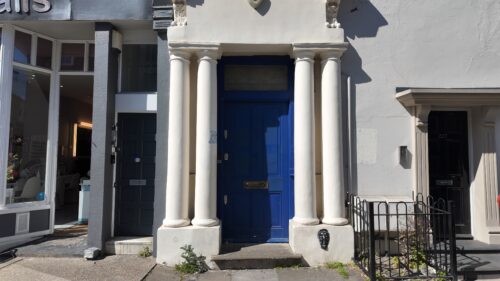
280 Westbourne Park Road, Notting Hill, London W11 1EH
One of the most recognisable film locations in London is the famous blue door from Notting Hill.
The property originally belonged to writer Richard Curtis while he was developing the film. According to interviews, the production designer unknowingly photographed Curtis’s own front door during location scouting, which eventually became William Thacker’s home in the movie.
The doorway appears throughout the film, including scenes where:
After the film became a global success, the original blue door was auctioned off. For a time, the replacement door was painted black because of constant attention from tourists and film fans. It later returned to its now-famous blue colour.
Today, it remains one of the most visited Notting Hill filming locations and a popular photo stop for visitors exploring the area.
Fun fact: Rhys Ifans reportedly embraced the role of Spike so seriously during filming that he deliberately avoided washing regularly to stay in character.
13 Blenheim Crescent, Notting Hill, London W11 2EE
The Travel Bookshop remains one of the most famous locations associated with Notting Hill.
Many visitors assume this was the exact shop used throughout filming. In reality, most interior scenes were recreated at Shepperton Studios. However, the real bookshop directly inspired the fictional Travel Bookshop featured in the film.
Richard Curtis reportedly spent time inside the original shop while developing the screenplay, using it to help shape William Thacker’s character and the atmosphere of the story.
The original Travel Bookshop eventually closed in 2011, but continued interest from film fans helped keep the location connected to Notting Hill long after filming ended.
Today, it remains one of the most recognisable Notting Hill filming locations and one of the most photographed stops for visitors exploring the neighbourhood.
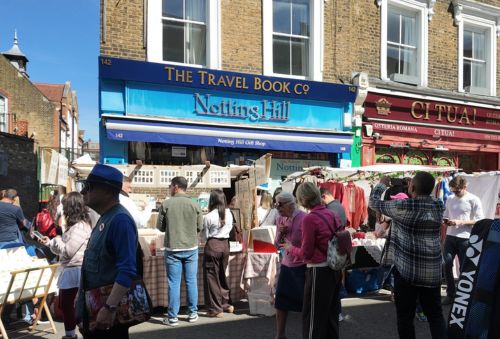
Portobello Road, Notting Hill, London W11
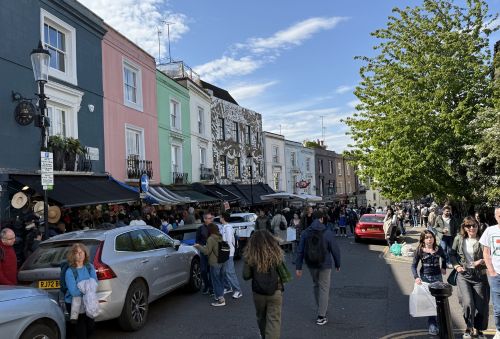
No visit to Notting Hill is complete without walking along Portobello Road.
The famous market appears throughout Notting Hill and plays a huge role in shaping the neighbourhood’s colourful identity on screen. One of the film’s most memorable sequences takes place here during the famous “four seasons” montage, where William walks through the changing market as the seasons and his emotions gradually shift around him.
Even today, visitors still recognise many of the area’s best-known features, including:
Following the release of Notting Hill in 1999, Portobello Road became even more popular with visitors from around the world, helping transform the area into one of London’s most visited neighbourhoods.
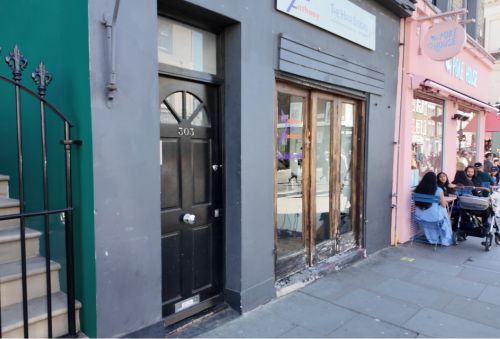
Westbourne Park Road, Notting Hill, London W11
One of the smaller but instantly recognisable moments in Notting Hill takes place near this location when Anna accidentally spills orange juice on William shortly after visiting the Travel Bookshop.
The scene helps begin the awkward but charming relationship between the two characters and captures the everyday atmosphere that made the film feel more grounded than many romantic comedies of the time.
Although it is a relatively simple moment in the story, fans still recognise the doorway and surrounding street from one of the film’s earliest scenes together.
Like many locations used throughout Notting Hill, the area still looks remarkably similar today and remains part of the neighbourhood’s lasting connection to the film.
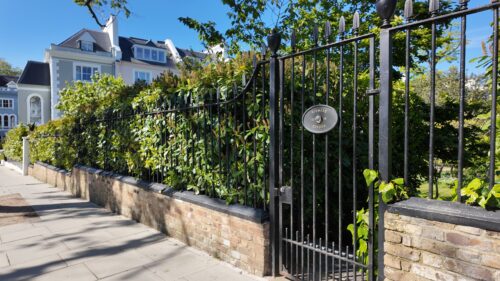
Rosmead Road, Notting Hill, London W11 2JG
One of the film’s most memorable scenes takes place near the private garden square where Anna and William climb over the gates late at night after spending the evening together.
Fans will instantly recognise the location from the famous:
“Oops-a-daisy!” scene.
Although the gardens themselves are private and only accessible to local residents, visitors still regularly stop outside the gates to see one of the film’s most iconic romantic moments in real life.
The sequence helped turn Rosmead Gardens into one of the most recognisable Notting Hill filming locations, despite the gardens rarely being fully visible on screen.
Interestingly, the famous bench featured during the scene was later relocated to Perth in Australia. It later became a tourist attraction in its own right.
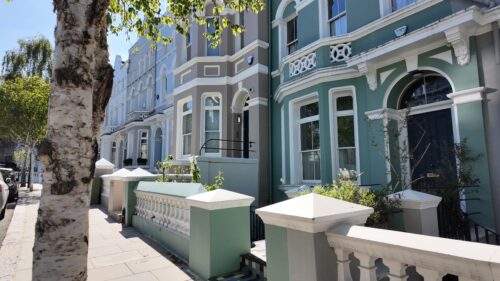
91 Lansdowne Road, Notting Hill, London W11 2LF
Bella and Max’s home appears several times throughout Notting Hill, most famously during the chaotic birthday dinner scene where Anna joins William’s group of friends for the evening.
It is here that Anna reveals how much she was paid for her latest film. The scene became one of the movie’s most memorable moments and highlighted the contrast between her Hollywood lifestyle and William’s ordinary world.
According to reports from the production, Julia Roberts experimented with different salary figures during filming before the final version made it into the finished scene.
Although the interior scenes were recreated on a soundstage, the exterior remains instantly recognisable today.
The house sits among some of Notting Hill’s most elegant residential streets.
Golborne Road & Bevington Road, London W10 5PS
One of the lesser-known filming locations from Notting Hill is the junction used for Max’s struggling restaurant in the film.
In the movie, William’s friend Max owns a restaurant that appears to have very few customers, becoming part of the film’s understated humour and awkward charm throughout several scenes.
Today, the location has changed significantly and is now home to different local businesses, but many fans still recognise the corner from the film.
Compared with the colourful streets and busy atmosphere around Portobello Road, this part of the neighbourhood feels noticeably quieter and more residential, offering visitors a glimpse into another side of Notting Hill beyond the main tourist areas.
Stanley Gardens, Notting Hill, London W11
Fans of Notting Hill will recognise this area from the chaotic race across London towards the end of the film, as William and his friends desperately try to reach Anna before she leaves for America.
The view towards St Peter’s Church appears during the famous moment when Max suddenly stops the car and shouts:
“James Bond never had to put up with this sort of shit.”
The surrounding streets, lined with elegant pastel-coloured terraces and grand Victorian houses, remain some of the most picturesque roads in Notting Hill today.
Even beyond the film connection, Stanley Gardens and the area around St Peter’s Church are considered among the most beautiful parts of the neighbourhood. It remains a popular area to explore on foot.
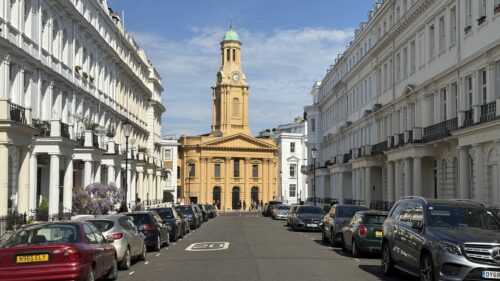
One of the reasons Notting Hill attracts so many film fans is because several other famous filming locations can also be found nearby.
From romantic comedies and family films to celebrity homes and hidden mews streets, the area has become closely linked with some of London’s most recognisable on-screen locations.
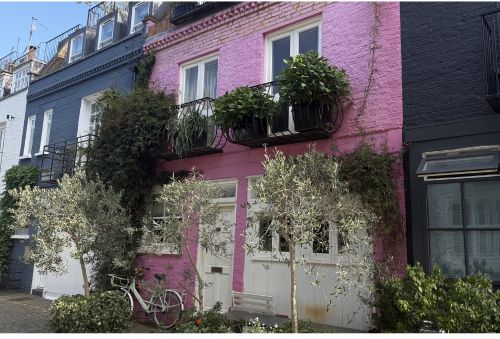
St Luke’s Mews, Notting Hill, London W11 1DF
This pastel-coloured mews became internationally famous after appearing in Love Actually during the iconic:
“To me, you are perfect” scene featuring Andrew Lincoln and Keira Knightley.
Although the scene only lasts a few minutes, it helped turn St Luke’s Mews into one of the most photographed streets in Notting Hill.
With its colourful houses, cobbled road and quiet residential atmosphere, the mews perfectly captures the postcard-style charm that has made this part of West London so popular with filmmakers over the years.
86 Portobello Road, London W11 2QD
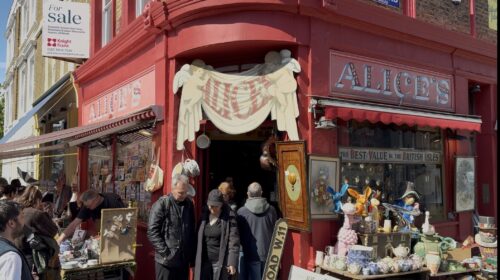
Fans of the Paddington films will instantly recognise Alice’s Antiques as the exterior of Mr Gruber’s antique shop.
Located along Portobello Road, the shop appears throughout both Paddington films and has become a popular stop for visitors exploring the area’s film connections.
The colourful storefront fits perfectly into the character of Notting Hill and reflects the mix of antiques, independent shops and quirky businesses that helped make Portobello Road famous long before it appeared on screen.
Today, it remains one of the most photographed and recognisable shops along Portobello Road.
103 Notting Hill Gate, London W11 3LB
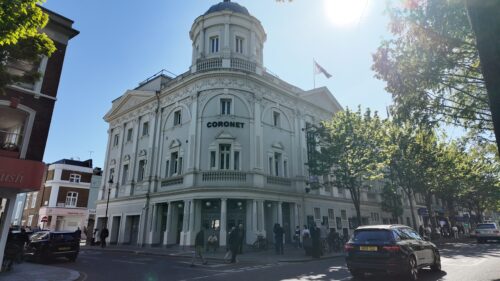
The Coronet Theatre appears in Notting Hill during the scene where William goes alone to watch Anna Scott starring in the sci-fi film Helix after discovering that her boyfriend has unexpectedly arrived in London.
Originally opened in 1898 as the Coronet Cinema, the historic venue later closed before being restored to its original theatrical roots as The Coronet Theatre.
Located on Notting Hill Gate at the corner of Hillgate Street, the building remains one of the neighbourhood’s most recognisable entertainment landmarks and reflects the area’s long connection with film, theatre and the arts.
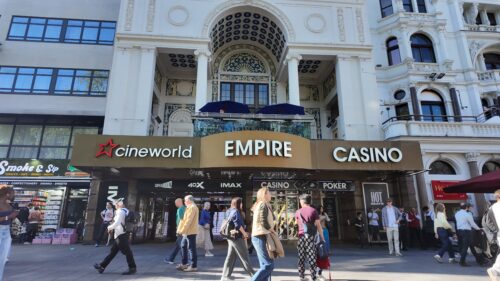
Although most of Notting Hill was filmed around Portobello Road and the surrounding streets of West London, several scenes were also filmed at famous locations across central London.
These locations helped expand the film beyond the neighbourhood itself and added to the glamorous “London romance” atmosphere that runs throughout the story.
From luxury hotels and celebrity restaurants to grand historic buildings, the film contrasts William’s ordinary life in Notting Hill with Anna Scott’s world of fame, film premieres and international celebrity.
150 Piccadilly, St. James’s, London W1J 9BR
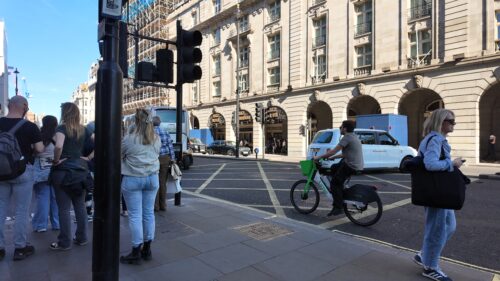
One of the most important London locations featured in Notting Hill is The Ritz.
The world-famous hotel appears during several scenes connected to Anna Scott’s celebrity lifestyle.
One memorable moment shows William pretending to be a journalist so he can see her at a press conference.
Many scenes were filmed inside the elegant Trafalgar Suite, with additional filming taking place around the reception and exterior entrance.
At the time, The Ritz rarely allowed this level of access for film productions, making it one of the more exclusive settings used in the movie.
Long associated with royalty, film stars and luxury London society, The Ritz provided the perfect contrast to William’s far more ordinary life in Notting Hill.
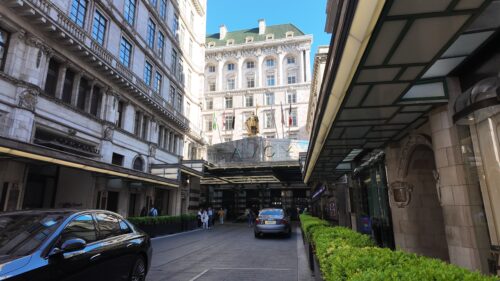
Another famous London hotel connected to Notting Hill is The Savoy.
Located on the Strand overlooking the River Thames, The Savoy has long been associated with old Hollywood glamour, celebrity culture and luxury travel, making it a fitting backdrop for Anna Scott’s world of fame and international stardom.
Opened in 1889, the hotel quickly became one of London’s most iconic luxury destinations and has welcomed generations of actors, musicians, politicians and royalty over the years.
Like The Ritz, The Savoy helps reinforce the contrast between Anna’s glamorous celebrity lifestyle and William’s far quieter life in Notting Hill.
19 Old Park Lane, Mayfair, London W1K 1LB
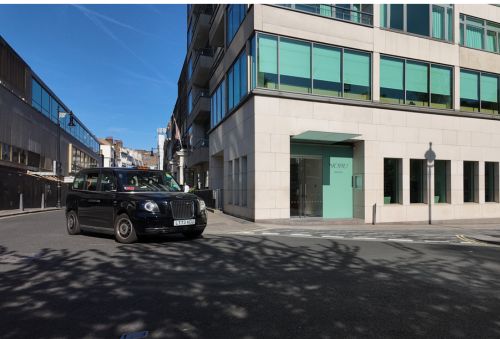
Another memorable London location featured in Notting Hill is the original Nobu restaurant in Mayfair.
The restaurant appears during William and Anna’s dinner date, when a group of loud diners begin making insulting comments about Anna Scott without realising she is sitting directly behind them.
The scene quickly becomes one of the film’s most awkward and memorable moments.
After William unsuccessfully attempts to defend her, Anna calmly walks over to confront the table herself, delivering one of the film’s sharpest lines as she reminds them: “I am, in fact, a very good actress.”
At the time of filming, Nobu had already established itself as one of London’s most fashionable celebrity restaurants, attracting actors, musicians, models and high-profile public figures throughout the late 1990s and early 2000s.
The restaurant’s reputation for celebrity culture and exclusivity made it the perfect setting for a scene highlighting the contrast between Anna Scott’s Hollywood fame and William’s ordinary London life.
Nobu Old Park Lane later became linked to one of London’s most infamous celebrity scandals.
In 1999, shortly after retiring from Wimbledon, tennis star Boris Becker had a brief encounter there with Russian model Angela Ermakova, which later resulted in the birth of his daughter, Anna.
For years, tabloids claimed the encounter took place in a broom cupboard at the restaurant, turning the story into part of British pop culture. Becker later disputed that version of events, saying it actually happened on a staircase near the bathrooms because the cupboard was “too small”.
The scandal quickly became one of the most talked-about celebrity stories associated with the restaurant and reportedly contributed to Becker’s highly publicised divorce soon afterwards.
At the height of London’s late-1990s celebrity scene, Nobu became known almost as much for the famous names linked to it as for the restaurant itself, adding another layer of notoriety to one of Notting Hill’s most memorable filming locations.
Hampstead Lane, London NW3 7JR
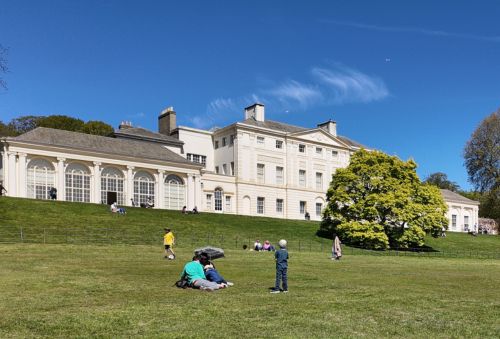
Kenwood House appears in Notting Hill during one of the film’s most emotional scenes.
The grand neoclassical villa on the edge of Hampstead Heath was used as the filming location for the fictional Henry James period drama that Anna Scott is working on during the film.
This is the moment where William arrives to surprise Anna on set, only to overhear her dismissively describing him to another actor as: “Just some person who got in through the door.”
Heartbroken, William quietly walks away without Anna realising he was there.
The elegant exterior and landscaped grounds of Kenwood House provided the perfect backdrop for the fictional costume drama scenes, contrasting sharply with the colourful streets and everyday atmosphere of Notting Hill itself.
Today, Kenwood House is managed by English Heritage and remains open to the public. Visitors can explore the historic interiors, landscaped gardens and famous art collection while discovering one of the lesser-known filming locations connected to Notting Hill. For opening times and visitor information, visit the Kenwood House website.
More than two decades after its release, Notting Hill remains one of Britain’s most quoted romantic comedies, with several lines becoming part of popular culture.
Some of the film’s most memorable quotes include:
Many of these moments are still closely associated with the filming locations around Notting Hill today, particularly Portobello Road, Rosmead Gardens and the streets surrounding William’s flat.
While many visitors come searching for the famous blue door or the Travel Bookshop, the real charm of Notting Hill goes far beyond the film itself.
From hidden mews streets and celebrity homes to music history, colourful market culture and nearby filming locations, the neighbourhood has layers of history and character that many visitors miss when exploring alone.
Even after more than two decades, parts of Notting Hill still feel strangely cinematic, with streets and corners that remain instantly recognisable from the film.
It is one of the reasons Notting Hill continues to be one of the most fascinating and enjoyable areas to explore in London, whether you are a film fan or simply discovering the neighbourhood for the first time.
While many visitors come searching for the famous blue door or the Travel Bookshop, the real charm of Notting Hill goes far beyond the film itself.
From hidden mews streets and celebrity homes to music history, colourful market culture and nearby filming locations, the neighbourhood has layers of stories that many visitors miss when exploring alone.
It is one of the reasons Notting Hill continues to be one of the most fascinating areas to walk around in London, whether you are a film fan or simply exploring West London for the first time.
For those wanting to discover the area in more depth, there are guided walks available which combine famous filming locations with the wider history, celebrity connections and stories behind modern Notting Hill itself.
You can find more information about the Notting Hill Walking Tour here:
Even after more than two decades, parts of Notting Hill still feel instantly recognisable from the film, making it one of London’s most memorable neighbourhoods to explore.